


♟️ The Cold War’s Chessboard: The Historic Duel Between Fischer and Spassky
- ChartSaga
- Jul 20, 2025
- 2 min read

Updated: Jul 22, 2025
What Happened in Reykjavik on July 20, 1972?
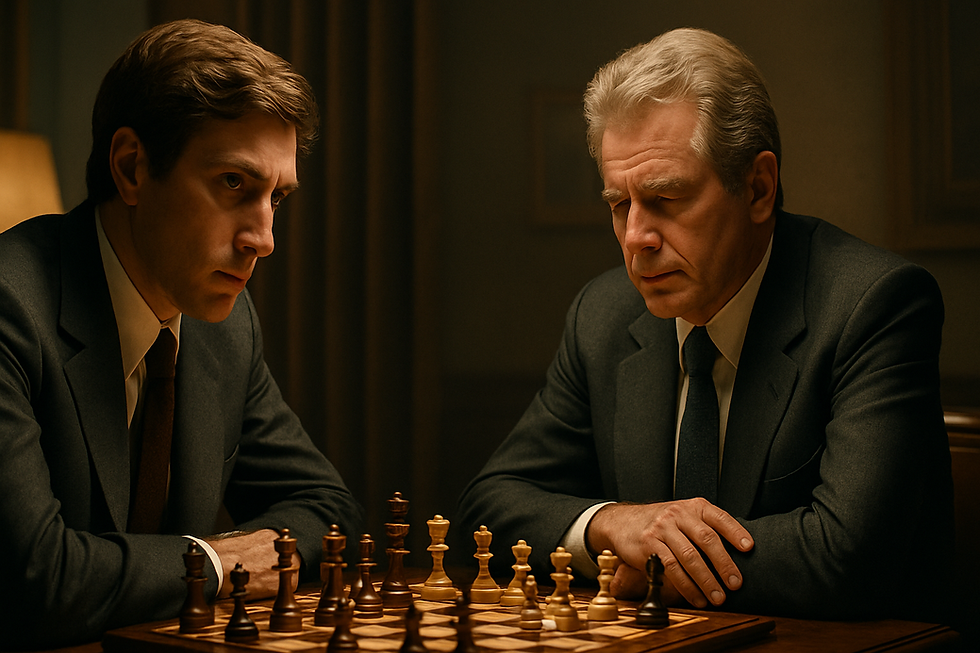
July 20, 1972... The quiet capital of Iceland, Reykjavik, was witnessing an extraordinary event. Journalists from around the world gathered, eagerly awaiting the start of one of the most talked-about chess matches in history. But this was no ordinary championship. On either side of the board stood the representatives of the two superpowers of the Cold War: Bobby Fischer and Boris Spassky.
🎭 The Players Take the Stage: The Tale of Two Geniuses
Boris Spassky was the embodiment of the Soviet chess school’s pursuit of perfection. Holding the world championship title that had been under Soviet control for 24 years, he was known for his calm demeanor, discipline, and strategic depth.
Opposite him was Bobby Fischer — the American prodigy who was shaking up the chess world. With an aggressive style, rebellious attitude, and extraordinary talent, he surprised everyone. His demands and threats to withdraw before the match drove organizers to the brink and left the world wondering: “Will he actually play?”
🔥 Game 6: An Unforgettable Moment in Chess History
The match took an unexpected turn. Fischer lost the first game and boycotted the second in protest. Yet, on July 20, during the sixth game, the world witnessed a completely different side of Fischer.
Playing with the black pieces, Fischer displayed such a brilliant strategy that Spassky’s astonishment was clear. At the game’s conclusion, an unexpected gesture took place: Spassky stood up and applauded Fischer. This rare sign of respect has since become a legendary moment in chess history.
Experts describe this game as “one of the finest in the history of chess.” Fischer’s moves astonished not just his opponent but chess fans worldwide.
🌍 The Silent Front of the Cold War
Fischer went on to win the match 12.5 to 8.5, ending the Soviet Union’s long-standing dominance in chess. This victory was more than just a sporting achievement for America—it was a symbolic turning point in the Cold War.
Despite his defeat, Spassky’s sportsmanship and grace left a lasting impression. By handing over the throne with dignity, he became one of the most respected figures in the world of chess.
📚 Why Do We Still Talk About It?
Historical Significance: This match was a battle of intellect and strategy that went beyond the propaganda wars of two superpowers.
Sporting Legacy: Fischer’s performance in Game 6 remains a teaching example in chess circles today.
Human Element: Spassky’s applause represents a culture of respect that transcends competition.
✍️ Final Thoughts
The Fischer-Spassky match is regarded as one of the greatest legends in chess history. What do you think — could we see such a symbolic encounter in today’s world? Share your thoughts with us!

Comments